
A non-surgical brow lift raises the outer brow by a few millimetres, using precisely placed injectables to relax the muscles that pull the brow downwards. The result is a subtly more open, rested eye rather than a dramatic change. Heaviness above the eye is a common and gradual consequence of ageing rather than a medical problem, though sudden or one-sided drooping is different and needs medical assessment. At a doctor-led aesthetics clinic in Birmingham, the first step is always working out why the brow sits where it does.
The technique is often described as a chemical brow lift. It works on muscle balance, not on skin removal, which is why it suits early to moderate changes and not advanced skin laxity.
Understanding the difference matters, because muscle-based lifting and skin-based tightening are separate problems. Carefully dosed anti-wrinkle injections address the muscular component with millimetre-level placement.
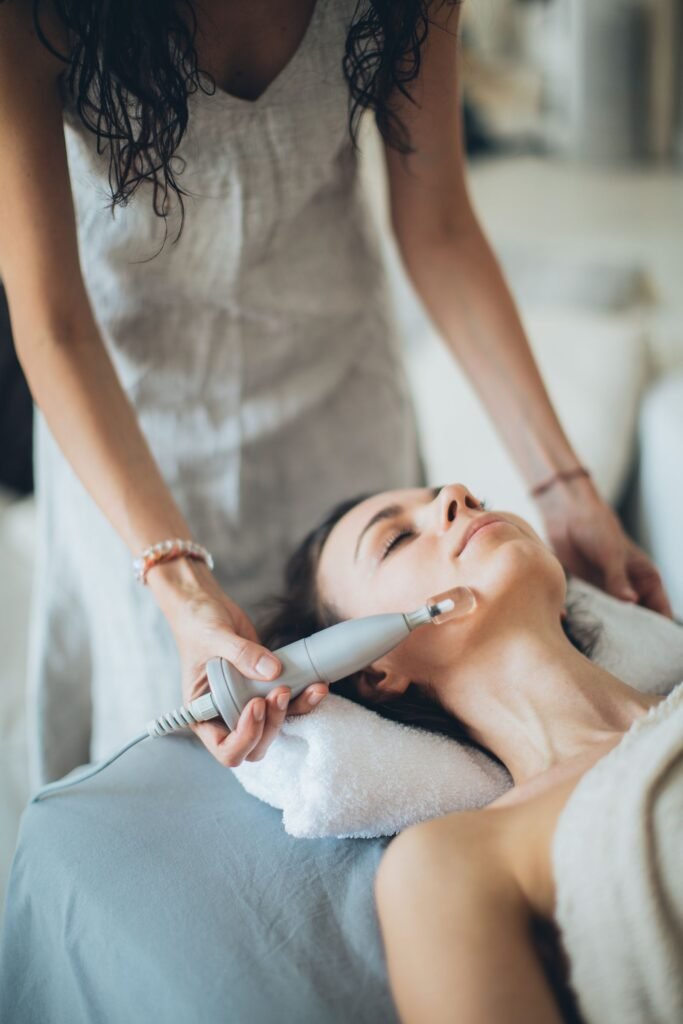
Where the skin itself has lost firmness, energy-based treatment is the more logical route. RF microneedling stimulates collagen in the dermis and improves the quality of the tissue being lifted.
Volume loss in the temple and upper cheek also drags the brow down, and restoring structure with dermal fillers can support the brow indirectly without touching it at all.
Because these mechanisms overlap, assessment matters more than the treatment menu. A consultation at the clinic in Edgbaston establishes which factor dominates in your face.
You can book a consultation online, including a personalised skin and facial assessment before any treatment is recommended.
What Is a Non-Surgical Brow Lift?
A non-surgical brow lift is the strategic relaxation of the depressor muscles around the brow so that the elevator muscle can act with less opposition. The brow position is the net result of a constant tug of war between muscles that lift and muscles that pull down.
The Muscles Involved
- Frontalis: the only true brow elevator, running vertically across the forehead.
- Orbicularis oculi: the circular muscle around the eye, whose upper outer fibres pull the brow tail down.
- Corrugator supercilii: draws the brows together and downward, creating frown lines.
- Procerus: pulls the medial brow down, producing the horizontal line between the brows.
Relaxing the depressors selectively, while preserving frontalis function, allows the brow to sit slightly higher. Over-treating the frontalis does the opposite and causes brow heaviness, which is the most common error in inexperienced hands.
Is a Heavy Brow Something to Worry About?
- Common and gradual: a slowly descending brow tail with age, caused by volume loss, skin laxity, and muscle changes. Purely aesthetic.
- Temporary: puffiness from poor sleep, fluid retention, or allergy, which resolves.
- Treatment-related: temporary brow heaviness following poorly placed injectables, which wears off as the product metabolises.
- Requires medical assessment: sudden drooping, asymmetry appearing overnight, drooping of the upper eyelid itself, double vision, or associated weakness elsewhere. These need prompt medical review rather than aesthetic treatment.
This distinction is one reason treatment should be delivered in a clinical setting by GMC-registered medical professionals who can recognise what is not cosmetic.
Why Brows Descend
Muscle Balance
Repeated squinting and frowning strengthens the depressors over decades, while the frontalis fatigues. The net vector shifts downward.
Volume Loss
The temporal fossa hollows, the lateral cheek deflates, and the supportive fat pads beneath the brow diminish. The brow loses its scaffolding.
Skin and Collagen Change
Collagen and elastin decline, so the tissue holds less tension and drapes rather than supports.
Bone Remodelling
The orbital rim widens subtly with age, reducing structural support around the eye.
Lifestyle Factors
- Ultraviolet exposure, which is the largest modifiable contributor to collagen breakdown.
- Smoking, which impairs microcirculation and collagen synthesis.
- Poor sleep and chronic stress.
- Significant weight fluctuation.
How the Treatment Is Performed
- Assessment. Static and dynamic examination of brow position, frontalis strength, eyelid position, and asymmetry, with photographs recorded.
- Medical review. Discussion of medical history, medications, previous treatments, and any neuromuscular conditions.
- Planning. Mapping injection points based on your muscle pattern rather than a generic template.
- Preparation. Skin cleansing and antisepsis. Topical numbing is rarely needed as the needles are very fine.
- Injection. Small, precise doses into the lateral orbicularis, and often the corrugator and procerus, with conservative or no treatment of the lower frontalis.
- Aftercare guidance. Remaining upright for several hours, avoiding rubbing the area, and deferring strenuous exercise for the rest of the day.
- Review. A follow-up appointment at around two weeks to assess the result and refine if necessary.
Onset is gradual, typically beginning within three to five days and settling at around two weeks. Duration is commonly three to four months, varying with metabolism and muscle strength.
Comparison of Brow-Lifting Approaches
Injectable Brow Lift
- Millimetre-level lift, subtle and natural.
- No downtime, treatment takes minutes.
- Temporary, requiring maintenance.
- Best for muscle-dominant descent.
Volumising With Filler
- Restores temple and lateral cheek support.
- Indirect lift with improved facial contour.
- Longer lasting than injectables that relax muscle.
- Best for volume-dominant descent.
Energy-Based Tightening
- Stimulates collagen for gradual firming.
- Requires a course and several months to show full benefit.
- Best for mild to moderate skin laxity.
Surgical Brow Lift
- Greatest degree of change and longest lasting.
- Involves surgery, anaesthesia, and recovery time.
- Appropriate for advanced laxity and significant excess tissue.
The Practical Summary
Injectables refine, fillers support, energy devices firm, and surgery removes. A realistic plan often combines the first three rather than relying on any one alone.
Myths About Injectable Treatments
Myth: it will freeze my face. A frozen appearance results from excessive dosing and poor placement, not from the product itself. Conservative, anatomically guided dosing preserves expression while softening lines.
Myth: once you start you cannot stop. The effect simply wears off gradually and the muscle returns to its previous activity. Nothing worsens because you stopped.
Myth: injectables thin the skin permanently. There is no evidence for this. Reduced muscle movement can improve skin quality over time by limiting repeated creasing.
Myth: a brow lift with injections works for everyone. It does not. Patients with significant skin excess or eyelid ptosis will be disappointed, which is exactly why honest assessment precedes treatment.
Myth: any practitioner can perform it. Brow work is among the least forgiving areas of the face. A few millimetres of misplacement can cause eyelid or brow droop, which is why treatment by a medical professional with detailed anatomical knowledge matters.
Risks, Side Effects, and Safety
- Small bruises or pinpoint redness at injection sites, usually settling within days.
- Mild headache in the first 24 to 48 hours.
- Temporary asymmetry, generally correctable at the two-week review.
- Brow or eyelid heaviness, uncommon and temporary, resolving as the effect wears off.
- Not suitable during pregnancy or breastfeeding, or with certain neuromuscular conditions.
- Any change in vision, spreading weakness, or signs of infection should be reported promptly.
Injectable treatments are medical procedures. They require a face-to-face consultation, informed consent, and a clear route back to the clinician who treated you.
Doctor-Led Care in Edgbaston, Birmingham
Highfield Aesthetics is a doctor-led medical aesthetics clinic in Edgbaston, Birmingham, focused on refining natural beauty through precision, science, and advanced treatment. Every treatment is delivered by GMC-registered medical professionals, and safety with natural-looking results is prioritised over rapid change.
The clinic offers anti-wrinkle injections, lip enhancement, skin rejuvenation, jawline contouring, RF microneedling, Profhilo and skin boosters, PRP therapy, exosome treatments, brow lift, mole removal, and a broad range of clinical skincare and injectable procedures. The environment is a smart clinic setting designed for precision, safety, and personalised treatment planning, which is what medical aesthetics Edgbaston patients increasingly expect.
To arrange a personalised assessment, call +44 121 816 0305 or email reception@highfieldaesthetics.co.uk. The clinic is located at 2 Highfield Rd, Edgbaston, Birmingham B15 3ED, United Kingdom, with further information at https://highfieldaesthetics.co.uk/, and online booking available for convenience.
This article provides general information about doctor-led aesthetics Birmingham treatments and does not constitute individual medical advice. Suitability, dosing, and expected outcomes must be determined at a face-to-face consultation, with structured follow-up review as part of responsible care.
Frequently Asked Questions
How much lift can I realistically expect?
A well-executed injectable brow lift typically raises the brow tail by one to three millimetres. This reads as a fresher, more open eye rather than an obvious change, and anyone promising a dramatic result from injections alone is overselling it.
How long does the effect last?
Most patients see three to four months of benefit, after which muscle activity gradually returns. Duration varies with metabolism, muscle strength, and how much repeated squinting or frowning you do day to day.
Will it help hooded eyelids?
It can improve the appearance of mild hooding by lifting the brow slightly and opening the eye. Where there is genuine excess eyelid skin, injectables will not remove it, and an honest assessment will say so at consultation.
Is there any downtime?
Very little. Most people return to normal activity immediately, avoiding strenuous exercise, saunas, and rubbing the area for the rest of the day. Small bruises are possible and usually cover easily.
What happens if I do not like the result?
The two-week review exists precisely for this. Small refinements can often balance asymmetry, and because the effect is temporary, nothing is permanent. Clear photographic records make objective comparison much easier.
Conclusion
A non-surgical brow lift works by rebalancing the muscles around the eye rather than tightening skin. Results are subtle, temporary, and highly dependent on accurate anatomical assessment. Choosing a doctor-led clinic for a full evaluation is what separates a fresh, rested look from an unnatural one.