
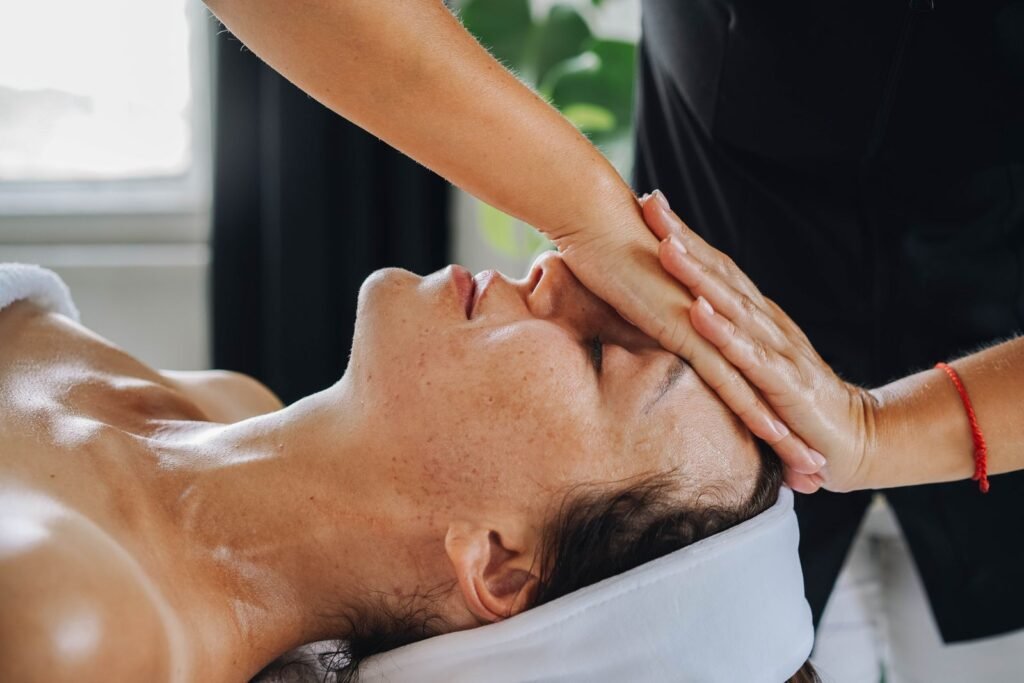
A doctor-led aesthetics consultation is a medical appointment, not a sales meeting. It involves a history, a facial and skin assessment, a discussion of realistic outcomes, and a written plan, and it frequently ends with a recommendation to do less than the patient expected. Concerns about lines, volume loss, or skin texture are common and almost always cosmetic rather than medical, though a proper consultation exists partly to identify the occasions when they are not. Booking a medical-grade doctor consultation is the correct first step rather than choosing a treatment from a price list.
The single biggest predictor of a good aesthetic result is not the product used. It is the accuracy of the assessment that preceded it.
This is why the clinic’s approach is built around evaluation before intervention. You can read more about the clinic and its doctor-led model before you attend.
Many consultations conclude with a skincare-first plan, because barrier function and pigmentation control underpin everything else. Medical-grade skincare is often the most cost-effective starting point.
Where injectable treatment is genuinely indicated, dosing is planned conservatively, and anti-wrinkle injections are mapped to your individual muscle pattern rather than a standard template.
Every plan is prepared at the Edgbaston aesthetics clinic with a clear explanation of alternatives, risks, and what to expect at review.
You can book a consultation online, which includes a personalised skin analysis.
What “Doctor-Led” Actually Means
Doctor-led means that clinical governance, assessment, prescribing, and treatment planning are carried out by registered medical professionals. In practical terms it changes four things.
- Diagnosis. A doctor can distinguish a cosmetic concern from an underlying medical condition presenting on the face.
- Prescribing. Prescription-only medicines require a face-to-face assessment by an appropriate prescriber.
- Complication management. Vascular occlusion, infection, and adverse reactions require immediate, competent clinical response.
- Restraint. Medical training encourages declining treatment where risk outweighs benefit.
Treatments delivered by GMC-registered medical doctors carry this framework by default. It is the reason the consultation looks more like a clinic appointment than a beauty appointment.
Before You Attend
- List your medications, supplements, and any allergies.
- Note previous aesthetic treatments, including approximate dates, areas, and products where known.
- Bring photographs of yourself from a few years ago if volume change is a concern.
- Come without make-up where possible, or expect to remove it.
- Avoid alcohol the night before if injectables are a possibility, as it increases bruising.
- Think about what bothers you, not which treatment you want. The first is diagnostic information, the second is a guess.
What Happens During the Appointment
- Concerns and goals. An open discussion about what you notice, when you notice it, and what outcome would feel like success.
- Medical history. Conditions, medications, autoimmune disease, pregnancy or breastfeeding, bleeding tendency, cold sore history, and previous adverse reactions.
- Static assessment. Examination of skin quality, pigmentation, vascularity, pore structure, scarring, laxity, and volume distribution at rest.
- Dynamic assessment. Observing muscle activity during expression, which determines injectable placement entirely.
- Facial analysis. Assessment of proportion, symmetry, and how areas interact, since the cause of a concern is often not where the concern appears.
- Skin analysis. Standardised photography and, where used, imaging to document baseline objectively.
- Options discussion. What can be achieved, what cannot, alternatives including doing nothing, and the likely trajectory over time.
- Risk and consent. A clear explanation of side effects, downtime, complications, and the aftercare required.
- Written plan. A staged plan with intervals, review points, and maintenance expectations.
Why the Cause Is Often Not Where the Problem Appears
Facial ageing is interconnected, and treating the visible symptom in isolation is the most common reason results look odd.
- Nasolabial folds frequently result from mid-face volume loss rather than from the fold itself.
- Marionette lines often reflect loss of jawline and chin projection.
- Under-eye shadowing is commonly driven by cheek descent.
- A heavy brow may relate to temple hollowing.
- A blurred jawline can be a skin laxity issue, a volume issue, or a muscle issue, and each needs a different treatment.
A structured assessment identifies the origin. Treating the origin usually requires less product and produces a more natural result.
What a Good Consultation Should Include
Signs of a Responsible Clinic
- Adequate appointment time, without pressure to decide immediately.
- A cooling-off period rather than treatment on the same visit as first contact for significant procedures.
- Willingness to say a treatment is not suitable for you.
- Written information on risks and aftercare.
- Baseline photography.
- A named clinician you can contact if something concerns you afterwards.
- A scheduled review appointment.
Warning Signs
- Discounts contingent on booking immediately.
- No medical history taken.
- Guarantees of specific outcomes.
- No discussion of risks.
- Treatment offered without any assessment of expression or anatomy.
- No clear route to aftercare or complication support.
Comparison: Consultation-First Versus Treatment-First
- Consultation-first: the treatment is chosen to fit the diagnosis, often using less product, with a staged plan and defined review.
- Treatment-first: the diagnosis is fitted to the treatment already booked, with a higher chance of over-treatment and an unnatural result.
- Cost over time: consultation-first is usually more efficient, because fewer corrective treatments are needed.
- Safety: consultation-first identifies contraindications before anything irreversible happens.
Myths About Aesthetic Consultations
Myth: a consultation commits you to treatment. It does not. A significant proportion of consultations conclude with skincare advice, sun protection, and a review rather than a procedure.
Myth: starting treatment young prevents ageing entirely. Early intervention can slow the etching of dynamic lines, but ageing involves bone, fat, muscle, and skin. No injectable pauses that process.
Myth: injectables always look obvious. Obvious results come from over-treatment and poor placement. Conservative, anatomically guided dosing is designed specifically to be undetectable.
Myth: fillers and anti-wrinkle injections are the same thing. One adds volume and structure, the other reduces muscle activity. They address different problems and are frequently confused.
Myth: if a treatment is popular it must be right for me. Popularity reflects marketing more than suitability. Skin type, anatomy, medical history, and goals determine what is appropriate for you specifically.
Realistic Expectations and Safety
- Bruising, swelling, and tenderness are common short-term effects of injectable treatment.
- Results from regenerative and energy-based treatments develop over weeks to months.
- Rare but serious complications exist, including vascular occlusion with fillers, which requires immediate management.
- Certain conditions, pregnancy, breastfeeding, and some medications may make treatment inadvisable.
- Any unusual pain, blanching, mottling, or vision change after injectable treatment should be reported urgently.
- Follow-up review is part of treatment rather than an optional extra.
A Clinic Designed Around Assessment
Highfield Aesthetics is a doctor-led medical aesthetics clinic in Edgbaston, Birmingham, focused on refining natural beauty through precision, science, and advanced treatment. Care is provided by GMC-registered medical professionals who prioritise safety and natural-looking results.
Services span anti-wrinkle injections, lip enhancement, skin rejuvenation, jawline contouring, RF microneedling, Profhilo and skin boosters, PRP therapy, exosome treatments, brow lift, mole removal, and a broad range of clinical skincare and injectable procedures. The smart clinic environment is designed for precision, safety, and personalised treatment planning, which is what people mean when they look for natural looking fillers Birmingham rather than a generic package.
To arrange your consultation and personalised skin analysis, call +44 121 816 0305 or email reception@highfieldaesthetics.co.uk. The clinic is located at 2 Highfield Rd, Edgbaston, Birmingham B15 3ED, United Kingdom, with further information at https://highfieldaesthetics.co.uk/ and convenient online booking.
This article gives general information about medical aesthetics Edgbaston consultations and is not individual medical advice. Suitability for any procedure must be assessed face to face, with informed consent and structured follow-up review.
Frequently Asked Questions
Will I be treated on the same day as my consultation?
Sometimes, where the assessment is straightforward and you have had time to consider the information. For more significant treatment plans a cooling-off period is preferable, because informed decisions are better made without time pressure.
What if I do not know what treatment I need?
That is the ideal position to attend in. Describing what bothers you is far more useful than naming a procedure, because it allows the assessment to identify the actual cause rather than confirming an assumption.
Is a consultation worth it if I only want skincare advice?
Yes. Barrier function, pigmentation, and sun protection underpin every other treatment, and a medical-grade skincare plan often delivers visible change on its own. Many patients start and stay here.
Do I need to stop any medications beforehand?
Never stop prescribed medication without medical advice. Some medicines increase bruising risk and this is factored into planning rather than a reason to discontinue them. Bring a full list to your appointment.
How often should I be reviewed?
Injectable treatments are typically reviewed at around two weeks to assess effect and refine if needed. Regenerative and energy-based treatments are reviewed over three to six months, since collagen change is gradual.
Conclusion
A doctor-led consultation prioritises accurate assessment over selling a procedure. Identifying the true origin of a concern usually means less treatment and a more natural outcome. Attending with your concerns rather than a chosen treatment gives you the best possible starting point.